
herbal mitochondria connection is best understood through iHerbMed’s safety-first, systems-biology approach: botanical compounds may support wellness pathways, but they do not diagnose, cure, or replace medical treatment. This article keeps the focus on evidence-informed education, practical safety context, and responsible Canadian natural health guidance.
🌿 The Herbal–Mitochondria Connection: How Plant Compounds Influence Cellular Energy in Chronic Illness
Estimated Read Time: 9–11 minutes
Introduction
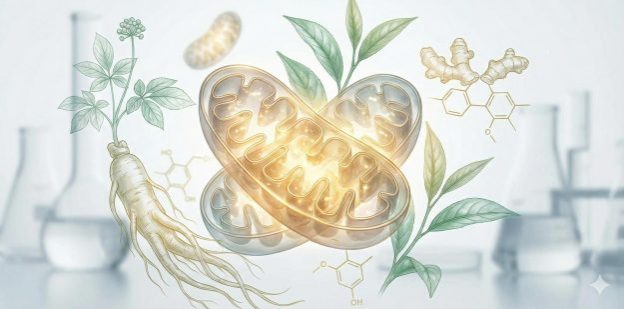
Mitochondria are essential metabolic organelles responsible for producing ATP, regulating immune activation, and maintaining cellular resilience. Dysfunction in these structures is increasingly recognized as a core mechanism underlying chronic illnesses such as post-viral fatigue, long COVID, fibromyalgia, metabolic disorders, and neurodegeneration [1].
Emerging research shows that specific plant-derived compounds—polyphenols, terpenoids, alkaloids, and adaptogenic glycosides—exert measurable effects on mitochondrial efficiency, biogenesis, oxidative stress, membrane stabilization, and inflammatory signaling [2]. This article provides an evidence-based review of how herbs influence mitochondrial biology and their potential relevance in chronic fatigue and chronic illness.
1. Mitochondria: The Foundation of Human Energy and Recovery
Mitochondria generate ATP via oxidative phosphorylation. When their function declines, the result can include fatigue, cognitive impairment, muscle weakness, reduced stress tolerance, and chronic inflammation. These symptoms appear in chronic fatigue syndrome, post-viral syndromes, autoimmune disease, metabolic dysfunction, and long COVID [3,4].
Herbal medicine cannot support mitochondrial disorders, but phytochemicals can influence:
These cellular mechanisms are now well-documented in molecular research.
2. How Plant Compounds Influence Mitochondrial Biology
2.1 Antioxidant Defense
Oxidative stress damages mitochondrial membranes and DNA. Plants rich in polyphenols and flavonoids help neutralize reactive oxygen species (ROS) and protect mitochondrial integrity [5].
2.2 Inflammatory Modulation
Chronic inflammation disrupts mitochondrial metabolism. Botanicals such as turmeric and boswellia downregulate NF-κB, IL-6, and TNF-α, allowing mitochondrial repair pathways to resume [6].
2.3 Mitochondrial Biogenesis
Some phytochemicals activate SIRT1 and PGC-1α, increasing the number and efficiency of mitochondria. This mechanism is observed with EGCG, resveratrol, and ginseng compounds [7].
2.4 Electron Transport Chain Support
Certain plant molecules improve electron flow within the ETC, reduce lipid peroxidation, and stabilize mitochondrial membranes [8].
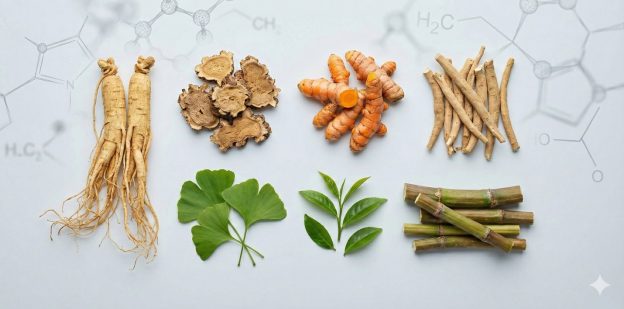
3. Key Herbs With Clinically Relevant Mitochondrial Effects
3.1 Panax Ginseng
Ginseng is widely studied for energy, endurance, and metabolic regulation.
Mechanisms
Evidence
A meta-analysis found significant improvements in fatigue, cognition, and quality of life in chronic illness groups [10].
3.2 Rhodiola rosea
An adaptogenic herb with strong mitochondrial and stress-modulating properties.
Mechanisms
Evidence
RCTs show benefits in burnout, chronic fatigue, and stress-related exhaustion disorder [12].
3.3 Curcuma longa (Curcumin)
A powerful anti-inflammatory polyphenol with mitochondrial protective effects.
Mechanisms
Evidence
Useful in chronic inflammatory conditions where mitochondrial dysfunction is secondary to cytokine activation.
3.4 Green Tea Catechins (EGCG)
EGCG has strong evidence for mitochondrial biogenesis and metabolic recovery.
Mechanisms
3.5 Berberine
A plant alkaloid known for its metabolic effects.
Mechanisms
Evidence
Berberine shows promise in metabolic syndrome and fatigue associated with glucose dysregulation.
3.6 Ashwagandha (Withania somnifera)
An adaptogen with antioxidant and mitochondrial-stabilizing effects.
Mechanisms
Evidence
RCTs show improvements in energy, stress biomarkers, and sleep quality.
3.7 Ginkgo biloba
Ginkgo supports neuronal mitochondrial function.
Mechanisms
Evidence
Demonstrated benefits in cognitive impairment and early data supporting recovery in brain fog.
4. Mitochondrial Dysfunction in Chronic Illness: Why Herbs Matter
Mitochondrial impairment is a known factor in:
Key pathways herbs influence
Biological Pathway | Supporting Herbs |
|---|---|
ATP production | Ginseng, Rhodiola |
Mitochondrial biogenesis | EGCG, Resveratrol |
Anti-inflammatory | Curcumin, Boswellia |
Neuroprotection | Ginkgo, Bacopa |
Oxidative stress | Turmeric, Green tea |
Metabolic function | Berberine |
Herbs provide adjunctive support, not primary treatment.
5. The Essential Role of Lifestyle Synergy
Scientific studies consistently show that mitochondrial rehabilitation requires:
Herbs offer molecular support but depend on a healthy physiological environment to function effectively.
6. Safety Considerations
Some mitochondrial-supportive herbs influence major biochemical pathways.
Key Safety Notes
Clinical oversight is recommended in chronic or complex cases.
7. Conclusion
The relationship between herbs and mitochondrial biology is one of the most promising areas in integrative medicine. While herbs do not support chronic illness, research shows they can support mitochondrial function by enhancing ATP production, reducing inflammation, improving biogenesis, and protecting against oxidative damage.
For individuals with chronic fatigue, long COVID, metabolic disorders, or chronic inflammation, mitochondrial-supportive herbs offer evidence-based adjunctive strategies that bridge traditional botanical wisdom and modern molecular science.
📚 References
Herbal Mitochondria Connection: practical clinical context
For iHerbMed readers in Canada, herbal mitochondria connection should be understood as evidence-informed education rather than a promise of diagnosis, treatment, or cure. The most responsible interpretation is systems-based: botanical compounds may influence inflammation, metabolism, stress physiology, microbiome signalling, or oxidative balance, but individual outcomes vary and depend on medications, health history, dose, product quality, and clinical supervision.
Clinical insight: Herbal strategies are safest when they are matched to the person, reviewed for interactions, and used alongside appropriate medical care. This is central to iHerbMed’s approach: Bridging Nature and Medicine.
Safety considerations for herbal mitochondria connection
Safety first: Herbal products can cause side effects, allergic reactions, and herb-drug interactions. People who are pregnant or breastfeeding, living with chronic disease, preparing for surgery, taking prescription medication, or managing immune, liver, kidney, cardiovascular, neurological, or metabolic conditions should speak with a qualified healthcare professional before using herbs or supplements.
Related iHerbMed resources
- About iHerbMed
- Herbal Insights
- Shop evidence-informed herbal products
- Personalized assessment
- Contact iHerbMed
Evidence-informed references
- NIH NCCIH Herbs at a Glance
- PubMed biomedical literature database
- Health Canada Natural Health Products Ingredients Database
- PubMed search results for herbal mitochondria connection
Frequently asked questions
Can herbal mitochondria connection replace medical care?
No. Herbal education does not replace diagnosis, monitoring, or treatment from a licensed healthcare professional. It may help support wellness decisions when used responsibly.
Is herbal mitochondria connection safe for everyone?
No. Safety depends on the person, medication profile, medical history, product quality, and dose. Interaction screening is important before combining herbs with medications.
How does iHerbMed approach herbal medicine?
iHerbMed uses a science-backed, systems-biology lens that respects traditional botanical knowledge while prioritizing medical safety, responsible language, and individualized guidance.
Medical disclaimer
This article is for educational purposes only and does not provide medical advice, diagnosis, or treatment. Herbal products and supplements are not appropriate for everyone. Always consult a qualified healthcare professional before starting, stopping, or combining herbs, supplements, or medications.