
Discover 5 critical insights on herbal neuroprotection, including botanicals that support brain inflammation, neuroplasticity, and cognitive resilience.

Estimated Read Time: 12–15 minutes
Introduction
The brain is uniquely vulnerable to inflammation, oxidative stress, metabolic disruption, and chronic stress physiology. These influences contribute to cognitive difficulties, mental fatigue, impaired memory, reduced resilience, and persistent “brain fog,” particularly after viral illnesses, chronic inflammation, or prolonged stress.
Modern neuroscience now confirms what traditional medical systems long suggested: specific botanicals exert measurable effects on neuroinflammation, neuroplasticity, mitochondrial resilience, and the brain–immune interface.
These neuroprotective actions are not merely symptomatic—they target upstream biological pathways influencing long-term brain health.
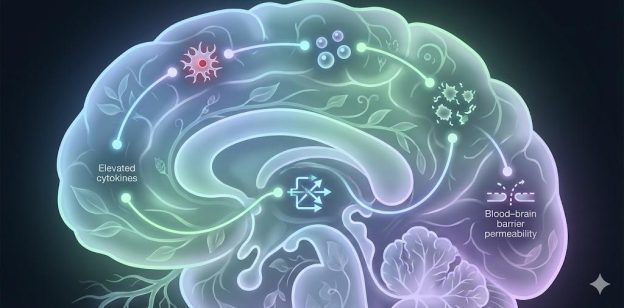
1. Neuroinflammation Is the Core Mechanism Behind Cognitive Decline
Neuroinflammation is driven by:
These processes underlie:
Our article
🔗 Botanical Anti-Inflammatory Pathways
explains how herbs reduce systemic inflammation—mechanisms that extend directly to the CNS.
Herbs with strongest anti–neuroinflammatory evidence:
These compounds cross or influence the BBB, lowering inflammatory signaling that disrupts cognition.
2. Mitochondrial Health Determines Cognitive Performance
The brain consumes 20–25% of the body’s ATP despite being only 2% of body weight. Neurons rely on mitochondrial efficiency for:
Mitochondrial dysfunction leads to:
Your article
🔗 The Herbal–Mitochondria Connection
details how botanicals enhance mitochondrial ATP production and decrease oxidative stress.
Neuroprotective herbs acting on mitochondria:
Neuronal energy = cognitive clarity.
3. Neuroplasticity Requires Botanical Support in Modern Chronic Stress States
Neuroplasticity—the brain’s ability to rewire and adapt—is reduced by:
Your article
🔗 Adaptogens and the Stress Response
explains how chronic stress harms the HPA axis, which directly affects cognitive circuits.
Herbs that promote neuroplasticity:
Lion’s Mane contains hericenones and erinacines—rare compounds shown to increase nerve growth factor (NGF), a key molecule in neuroplasticity and regeneration.
4. Gut–Brain–Immune Pathways Strongly Influence Cognitive Health
The gut communicates with the brain through:
Dysbiosis and intestinal permeability increase neuroinflammatory markers and worsen cognitive resilience.
Our article
🔗 The Microbiome–Inflammation Axis
describes how gut-driven inflammation influences systemic and brain pathways.
Herbs supporting the gut–brain axis:
These botanicals help reduce LPS translocation, a major contributor to neuroinflammation.
5. Neuroimmune Modulation Is Central to Brain Resilience
The brain and immune system communicate constantly.
Chronic immune activation can impair cognition through:
Our article
🔗 Herbal Immunomodulation
explains how herbs balance immune overactivity or underactivity—vital for brain resilience.
Key immunomodulatory neuroprotective herbs:
🔗 Canadian Wild Herbs) – northern polyphenols with antioxidant effects
These herbs calm immune-driven neuroinflammation while supporting normal immune vigilance.

Major Neuroprotective Herbs (Scientific Overview)
Below is a clinically structured summary of the top neuroprotective botanicals.
Lion’s Mane (Hericium erinaceus)
Ginkgo biloba
Curcumin
Bacopa monnieri
Rosemary (carnosic acid)
Rhodiola rosea
Clinical Applications of Herbal Neuroprotection
✔ Long COVID cognitive dysfunction
✔ Chronic fatigue–related cognitive issues
✔ Stress-related memory impairment
✔ Aging & mild cognitive decline
✔ Neuroinflammation
✔ Sleep disruption with cognitive consequences
✔ Elevated cytokines affecting brain function
✔ Gut–brain inflammatory patterns
This article links directly with your existing scientific clusters to build holistic, integrative medical authority.
Safety Considerations
While botanicals generally have favorable safety profiles, caution is recommended:
Always advise patients to consult a clinician for chronic neurological symptoms.
Conclusion
Herbal neuroprotection represents a powerful intersection between neuroscience, immunology, mitochondrial biology, and botanical medicine. Through effects on:
…botanicals offer a clinically meaningful approach to protecting cognitive function and supporting long-term brain health.
To further explore the interconnected systems influencing brain resilience, see:
📚 References